The Technoculture, Art and Games (TAG) Research Centre is Canada’s largest and most-established games research centre; a platform for interdisciplinary collaboration in digital game research and design housed in the Milieux Institute for Arts, Culture, and Technology at Concordia University in Montréal, Canada.
Recent Articles
As we open another year at Concordia, and TAG, we also open a new year for the TAG Critical Watch series.
In our final episode of the season we speak with Rob Gallager about his chapter “That Joke Isn’t Funny Anymore (Or Is It?): On Hitman and Gamer Humour(lessness).” We chat about Hitman as a comedy of contingency, the wonders of Sapienza, and contemplate the moral implications of Hitman’s victims.
On this episode we speak with Caroline Bem about their chapter “Humour in Pornographic Browser Games: From Undertale to Uddertale, a Case Study.” We chat about approaching game studies from the outside, sexuality in video games, and the link between games, sexuality, and humour.
On this episode we speak with Rory Summerley about his chapter “A Tool of Efficiency and Consumption to Destroy Man”: Irony and Sincerity in Travis Strikes Again: No More Heroes.” We chat about floundering when trying to make jokes during academic conferences, the difference between irony and parody, and the concept of abusive game design.
On this episode we speak with Samuel Poirier-Poulin about his chapter “Mark Matthews Stars in ‘Anatomy is Hard!’ A Struggling Student Tries to Make the Grade with His Professor”: Sexual Humour and Queer Space in Coming Out on Top.” We chat about queer humour in contrast to trends of queer trauma in games, and the positive public reception to Coming Out on Top, and tendentious jokes.
On this episode we speak with Darshana Jayemanne and Cameron Kunzelman on their chapter “Cybernetic Irony: Racial Humour from Mecha-Hitler to Nuclear Gandhi.” We chat about different cultural approaches to game humour, cybernetic irony, and the colonial roots of racialized humour in games.
On this episode we speak with Mateusz Felczak on his chapter “Emergence and Ephemerality of Humour During Live Coverage of Large-Scale eSports Events.” We talk about the difference between narrative game humour and live esports broadcasts, and how audience engagement changes the shape of humour.
On this episode we speak with Agata Zarzycka on her chapter “Ridiculing the Player: Live-Action Visualisations of Game Experience in YouTube Parody Videos as an Ambivalent Strategy of Self-Fashioning.” We talk about the humorous contrast between casual and serious play, remediated game humour, and clashes between mechanical and social play elements.
Upcoming Events
For 13 years now, The Game Awards (TGAs) have been crowning games, among an open field, and within specific categories, from multiplayer, to indie, to action, to most accessible, and on and on. However, if we widen our perspective, game awards have been an evolving experiment in legitimation,and cultural capital transfer since 1994, when Cybermania’ 94 aired, and more reliably since 2003’s first Spike Video Game Awards (VGAs).
Drawing on industrial perspectives, archival work and interviews conducted with the founder of the Academy of Interactive Arts and Sciences (AIAS), academic studies of awards (Zanescu, 2023; 2024; 2025; 2026; Svelch, 2023; 2026) and a structural analysis of TGA every workings, Andrei Zanescu discusses what function The Game Awards serve within the industry, how they interlink with journalistic bodies all over the world, and the formal solidification of the GOTY mold.
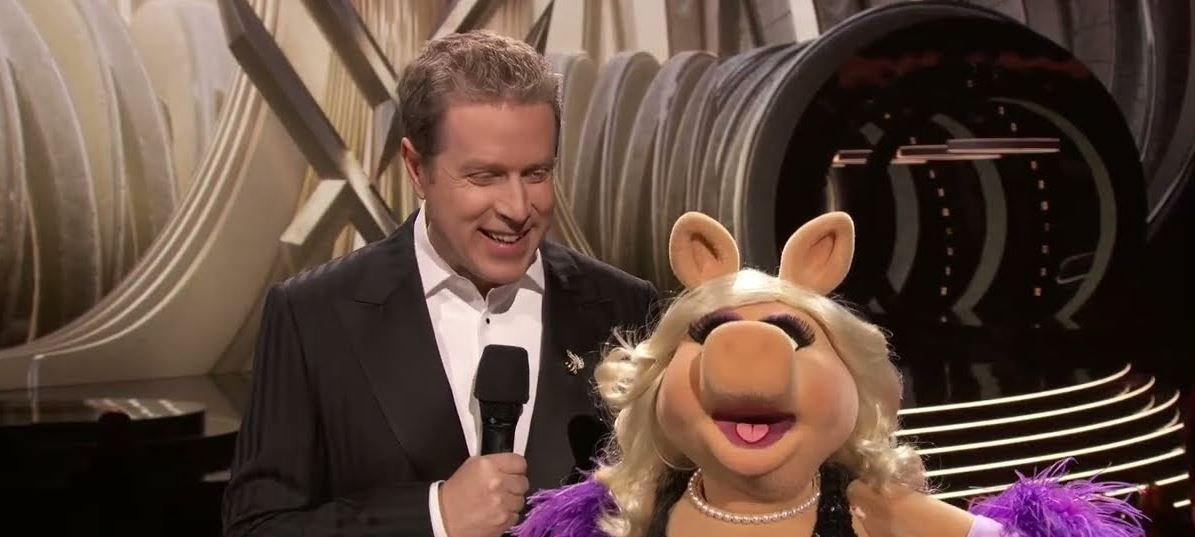
Join us at the TAG Research Centre on December 11th, from 5:00 to 6:00pm (or online), just before this year’s Game Awards to set the stage for what games impresario Geoff Keighley has come to call, the Oscars of Gaming.
This lecture is open to the public, but physical space is limited so be sure to sign up by contacting tag.coordinator@concordia.ca.
Celebrate the end of term with a brief digression from films to watch how the game industry fashions itself after Hollywood award shows through a critical watch of The Game Awards.