
TAG’s Research, Creation, and Past Events
Most Recent

On May 15th 2025, the Society for Arts and Technology (SAT) hosted LUDODROME -- a gathering of 40 experimental game makers! LUDODROME invited a collection of solo work, indie and artists' studio work, and even university research-creation initiatives that revolves around experimental games. TAG featured over 8 games made by its current members, alumni, and those who have gone on to create their own game studios!


It’s official! The NOSTAGAIN Network proudly presents Love & Loss 2025: Nostalgia Symposium and Research Creation Showcase with 27 presenters and artists who will explore what the “love” and “loss” of nostalgia means for individuals, communities, and what this looks like for different fields.


In June 2024, TAG hosted the annual Canadian Game Studies Association Conference, holding four days of panels, talks, keynotes, and game studies events with game scholars from across the globe.

What is a solar game?
Is it a story? A mechanic? A hardware object? Take the prompt as broadly as you’d like! Approach the question thematically through your game’s narrative or design around speculative hardware affordances.
The goal of this experimental game jam is not to develop a polished game but rather to design small game prototypes with GB Studio and to explore speculative solar inputs.
We invite you to think outside the box—to imagine handhelds differently. How might the game change if you can only play it on a solar-powered Game Boy? What if the controls were light sensors instead of buttons? What does sustainable solar play look like?
We’re curious to see how game makers of all levels approach the theme of solarity in all its forms. There exist few explicit solar games—let’s create and imagine new ones!

Descant (https://omch.tech/descant) is a Unity Dialogue System plugin designed to be easy to pick up and use, but with room for growth and customization. It was developed for a CART Independent Study, with the goal to address the missing niche for dialogue systems between ones that are enormous and expensive, and those that are tiny and un-featured. It uses a node-based dialogue creation system, and makes use of the Unity Component system concept for enhancing such nodes. The workshop will involve a simple introduction to the system and explanation of the Component framework, followed by a few hours for experimentation. It’ll function like a tutorial and something like a miniature game jam. At the end, some time will be reserved for feedback and improvement comments.

Join us for a candid and open conversation about game history and immersion in the context of Montreal Game Studies, featuring Dr. Carl Therrien from Université de Montreal and Dr. Darren Wershler from Concordia University. This is an open and freeform conversation where we discuss unconventional and exploratory approaches to researching and understanding videogame history and immersion. Through these topics, we reflect on the impact of the Montreal game research scene on our own work and within game studies and associated fields to articulate the challenges and possibilities of past and future collaboration between local research groups in Montreal, across lingual, institutional, and cultural borders.

In this paper I discuss the research-creation roadmap for the SunBlock One solar Minecraft server. SunBlock was devised as an ecomodding project that simultaneously addresses two major issues in energy transition research. The first, is the relatively unaddressed yet significant contribution of personal computing and especially gaming to the global carbon footprint and the second, on the role of popular and moddable sandbox games in fostering shared alternative energy imaginaries. We do this by extending ecomodding practice to include the material conditions for gameplay itself.
SunBlock One is a Forge modded Minecraft 1.20.2 Server running on an Intel NUC computer powered by a 12v LiON battery attached to a 100W solar panel. Solar, power and temperature data are visualized in the Minecraft game interface providing players with a real-time sense of the relative energy costs of their gameplay. Here, I will report on the work accomplished so far and open a discussion of how the project might progress over the summer as we develop new mods that might operationalize real-time energy data as game mechanics as well as thinking about larger questions around the potential for our system to counter-game Minecraft which is otherwise understood as a game about colonialist extractivism and neoliberal sensibility.


In two weeks, on March 22nd, one of the students who works with Jonathan Lessard, Shamanth, will be giving a small workshop in TAG about large language models (LLM - a kind of AI). Shamanth will be giving an overview of how transformers work and present a small notebook on how to fine tune language models for specific tasks. If you ever wanted a deeper understanding into how this kind of AI works, this workshop is for you!

As we emerge from a global period of great loss, sacrifice, and patience into a “new normal” fraught with conflict, ecological crisis, and rapid sociotechnical change…digital nostalgia has taken a turn towards encapsulation.
On social media, custom-made pop-culture dioramas are sold out to buyers eager to preserve the set of their favorite childhood video game or TV show. Meanwhile, costs of supporting digital cloud storage to hoard our pasts mount while we risk forgetting it anyway. Large language models “speak” from the frozen moments of their training data, stuck between the past and the next update. Those who itch for clairvoyance seek their own remembrance as cold comfort: in 2019, over 25,000 Koreans engaged in therapeutic “living funerals,” donning burial shrouds, posing for their own memorial portraits, and lying inside real coffins as the living chant prayers for the “dead”.
These containers of time are comparable to bottles full of ideological messages which recall a rose-tinted past, a somber future, a present tinged with grief.
If these items could talk, what “message in a bottle” do they have for us?
What are the social, ecological, and cultural impacts left in the present by our pursuit of the nostalgic past or future?
How far will we go to preview, pay, and pursue a time outside the present?
Rather than resting on the adage, “only time will tell,” this symposium asks participants to consider what these “bottles” tell us about the future we are drifting towards.

From the publisher: Scholars, critics, and creators describe certain videogames as being “poetic,” yet what that means or why it matters is rarely discussed. In Game Poems: Videogame Design as Lyric Practice, independent game designer Jordan Magnuson explores the convergences between game making and lyric poetry and makes the surprising proposition that videogames can operate as a kind of poetry apart from any reliance on linguistic signs or symbols.

You’re invited to DisinfoGames, an analog game jam hosted by Concordia University’s Disinformation and Games Research Project in partnership with ACT (Ageing + Communication + Technologies). This is a 2-day event taking place Friday May 19th and 26th from 9-4pm on the 6th floor of Concordia’s ER building (2155 Guy).

Check out The OTHER Market this Saturday April 22nd. The OTHER Market is a mini-larp locative media treasure hunt exquisite corpse gamey experience – designed over many months by the Liveness Research group at TAG.
The OTHER Market is part of a SSHRC project looking at ways to design what are now often called immersive experiences, so that they are truly participatory. This results in a structure which does not rely on a lot of actors (or other trained staff) to run a production and makes these kinds of projects more sustainable for small teams and companies with modest budgets.

Enculturing Anti-Racism, Decolonization, Equity, Diversity, & Inclusion in Games Research & Creation
Creating opportunities for meaningful equitable change in the games industry requires active and inclusive community-building. As a part of this mission, The Games Institute created the following speaker and workshop series to centre the voices of individuals from marginalized groups. This includes, but is not limited to, persons who are Black and/or Indigenous or otherwise racialized, women-identified, LGBTQ2S+, disabled and/or neurodivergent, and people from other under-represented communities.
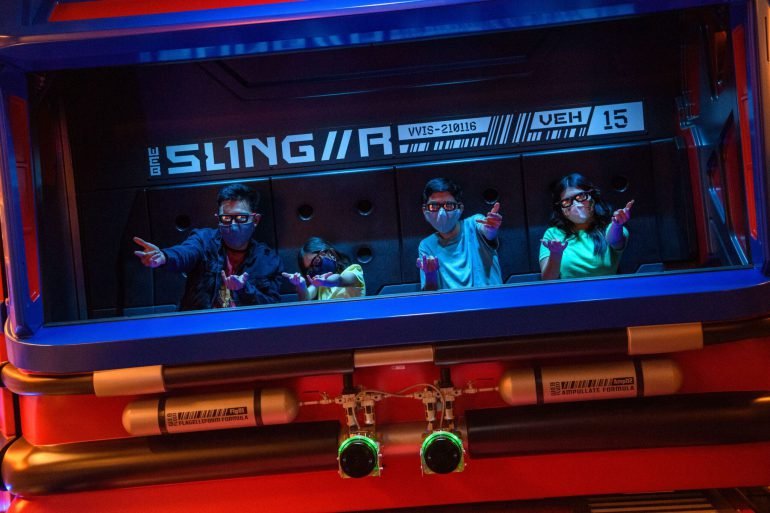
As interactivity has become an ever more important part of the theme park experience, interactive technologies deployed within parks have gravitated towards only a handful of proven platforms, eschewing thematic fit in favour of design expediency. This presentation will outline an ongoing research project examining the motivations for themed tangible interactivity, and how designers can improve guest experience through a sensitivity to the specificity of audience aspirations and iconic affordances drawn from transmedial sources.

We often hear makers say, “we wanted our game to resonate with audiences.” Likewise, we as audiences often express our recognition or enjoyment of a media product by stating how it resonates with us. However, what audiences and makers mean by resonance is not always the same, especially when it comes to AAA game studio productions involving gigantic scale and investment.

The GameBling Game Jam is back for a second edition and it’s all about luck this time!
The outcome of some gambling games relies on pure probability (i.e., slot machines, lotteries), while others involve a bit of skill (e.g., poker, mahjong). But for many gamblers, the odds of winning are also up to luck.
Luck is the magic that takes gambling from a question of probabilities to the perception of something that can be controlled. Perceived this way, luck can be influenced through ritualistic behaviors (think of superstitions like touching a ‘lucky’ four-leaf clover).
Luck is an intangible force, but also something that is perceived to be inherent in people, objects, and practices. Given these qualities, how do game designers play with luck?

LOSTAGAIN is a hybrid gathering of scholars and artists thinking about the tools we use today to access the nostalgia of our past that asks, “What if we could use these tools of forgetting the losses of a past to help us remember how to prevent more of them in the future?” Created by TAG student Richy Srirachanikorn, the crux of this symposium is to investigate how productivity can be achieved with the possibilities of video games.
*
Specifically, how can the emotions and emulations of a lost PAST in video games be used to prevent a FUTURE of repeating losses? If nostalgic gaming means we are “LostAgain” in our technologies, then how can we ensure what is “Found” on the other end of the experience may contribute to social kindness, collective responsibility, or simply, hope? Check out their website for more info and registration!

Did you know there were anime games made in Montreal? Come meet CyberConnect2 (Naruto STORM, Demon Slayer) VP Taichiro Miyazaki and art director Yohei Ishibashi at an event co-hosted by TAG and the Concordia Game Development Club! CyberConnect2 will introduce their studio, the artistic ins and outs of anime game development in Japan and Montreal, and their experience with indie publishing.

Are educational games bad?
Educational games are made with different goals than most commercial titles. How does this help and hinder these games and the design processes behind them? The Bad Game Arcade investigates these and other question with interviews, roundtable discussions, panels, and games made for learning. Many, many games made for learning. Educational games are being made by non-profits, universities, libraries, and game companies. It’s time for them to be talking and showing their work to each other–and us. Come check out presentations and play some games in 4th Space from January 23-27! For details about who’s talking, what you’ll be playing, and other programming, please visit the event’s web site.
The Bad Game Arcade is organized by former teacher and Concordia PhD candidate Scott DeJong, with support from the Concordia Public Scholars Program and the Technoculture, Art, and Games Research Centre.
Introduction to Coding
A hands-on workshop series that teaches the fundamentals of programming in a fun and interactive manner through customizable examples that explore shape, color, animation, and user interaction using C# and the Unity development platform. The only prerequisites are a computer with a recent version of Unity installed: https://unity.com/download.
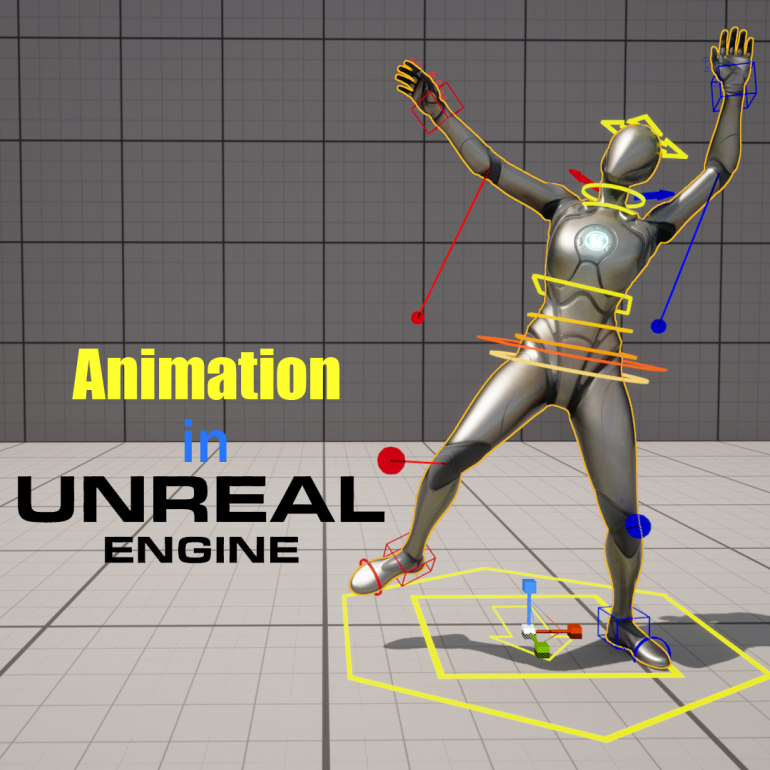
This workshop will cover character animation basics in Unreal Engine, and is aimed at beginners on the topic. A basic understanding of what rigging & skinning is is assumed but not required. Beginner-level experience with Unreal Engine is highly recommended.
In the workshop we will cover importing a provided skinned character into Unreal, some of the basics of Unreal’s control rig, how to add the character to a level sequencer and play animation on it. We will take the Unreal default third person project and replace the mannequin within it with our new character. We will briefly cover what animation state-flow and runtime animation systems are on a theoretical level. The exercise should serve as a good primer for beginners to research animation topics more in depth on their own.


This chapter investigates the developer’s moderation of Overwatch by analyzing the game’s official Blizzard forum discussions (2016–2019). The moderation put in place by Blizzard allows players to address, for instance, toxicity by reporting or avoiding players, while also rewarding positive play experiences. By analyzing the player discourse around these moderation systems, the data gathered yields a rift between casual and competitive players, resulting in conflicts in what players might expect and want from their play experiences. I conclude that varying expectations and standards of play feed into a community’s conflicts alongside the failure of moderation in curtailing unwanted behaviors.

Selected Items From The TAG Vault

Class depictions in videogames are prevalent, yet understudied. In this article, we analyse how the working class – particularly working-class men – have been depicted in videogames over the past 30 years. In doing so, we bring together a class- and gender-based analysis to study how narratives, representations, gameplay, and game systems construct the “working-class hero” as a central protagonist. This is done by examining eight paired examples of videogames that feature working-class characters in central roles, including janitor, fire-fighter, taxi driver, and bartender. Our analysis finds that some roles are glorified (such as firefighters), positioning their protagonists in direct conflict with white-collar settings and antagonists. However, many other roles task players with “doing their job” in the face of repetitive (and sometimes outlandish) working conditions. Through these examples, we document the portrayal of working-class videogame heroes, noting how videogames can both reinforce and subvert common media tropes.
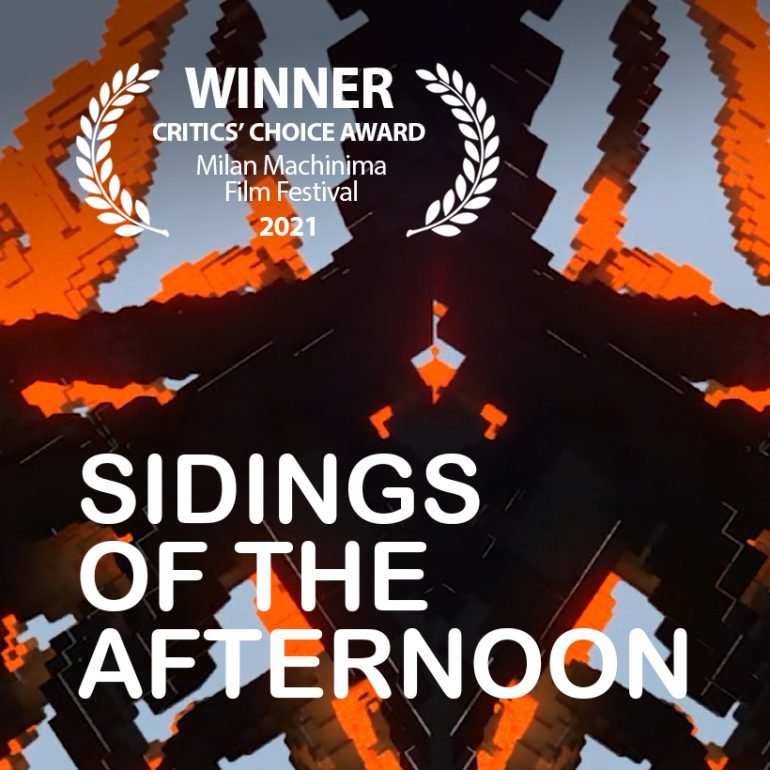
“Each age demands its own form.” – Hannes Meyer
Inspired by Maya Deren’s Meshes of the Afternoon, light works by Lászlo Moholy-Nagy, and Bauhaus urban design.
What can a filmmaker do when they are locked in during a pandemic? They make a film using a computer. With the participation of game scholars and academics from the Technoculture, Art and Games Research Centre, a town was built in Minecraft following the principles of Bauhaus. Just like the designers and artists of Bauhaus, we also need to rethink the way we use spaces, objects, cities. Beyond thinking about medical safety, as humans we need spaces that expand beyond our bodies’ physical circumference. Just like the light-shadow structures built by Moholy-Nagy, our inner worlds are bigger than the space our bodies take up. In Siding of the Afternoon, optimism for our future takes shape in a metaphor of see-through spaces and overlays, echoing the way our apartments expanded through videoconference windows connecting to and merging with other spaces all cross the world.
“Follow my train of thought, my shifting perception of the space around me, my fleeting relationships with nature and my urban cell. Seasons passing by while I stare at the same three objects in my house. What is outside, what will we find when we emerge? How will we move on when our toxic relationship with a virus that paralyzed our urban bodies end? Scathed or unscathed? Dreams, algae, shadows, flowers and knives.” – Gina Hara
The voiceover of the film was created by data-mining the most commonly used words and expressions by the players who built the buildings shown in the film.

An online chatroom for the animals of Age of Empires II. Experience the inner lives of more than ten unique animals in a rich biodiverse environment.
Design – Milan Koerner-Safrata
Design – Neilson Koerner-Safrata
Composer – Iven Jansen

Jingle Jigsaw is a single player dance/puzzle game that uses Kinect tracking and motion controls. The peculiarity about this game is that it uses no screen and relies solely on audio feedback for the gameplay. It’s a puzzle-game where the players must solve the level by assembling bits of a song in the right order using dance-like movements. This game tests the feasibility and fun of free movement play in dance games and as well as screenless digital-physical interactions.
A multiplayer version of this game is currently in development that will employ haptic devices and a physical installation using LED lights to give additional visual feedback to the player.
Created by: JoDee Allen and Adrian Holzer

In order to play games in new ways and facilitate competitive races on Twitch, speedrunners and hackers have cultivated a new genre of speedrunning based on remixing classic video games.
In this paper, I investigate the histories, affordances, and legalities of the browser-based applications that lie at the heart of this practice—video game randomizers—using the Very Adaptive Randomizer of Items and Areas (VARIA) for Super Metroid (1994) as a primary case study. I begin my analysis with an overview of Super Metroid’s underlying game structures while elaborating upon its connections to broader speedrunning histories. This is followed by a summary of how randomizers function and a chronicling of VARIA’s development, in which I draw comparisons to a number of commercially released game technologies. I then perform a more deliberate analysis of VARIA using the walkthrough method, scrutinizing the application’s environment of expected use (that is, how users are encouraged to interact with it) and providing a technical walkthrough of its features (that is, a step-by-step account of its functionality).

Jacques the Fatalist, a tale of fate, love and sex. An interactive adaptation of the XVIIIth century novel by Denis Diderot.
More info here: https://www.lablablab.net/?p=670

Bug Hunter is a game design research-creation project devoted to the study of glitches as labor. By documenting the production and reception of an experimental glitch-based first-person platformer, this project maps the creative forces animated by glitches conceptualized as an unavoidable design phenomenon and emergent gameplay features. The focal point of this inquiry is the conversation and productive exchange between the art of making games and the resisting yet generative materiality of the glitch. In terms of player experience, the game itself asks a political question. It wants to determine in which capacity glitches do (or do not) have the power to raise critical consciousness about 1) game design as rhetorical strategy instrumentalizing and commodifying the glitch and 2) glitching as a rhetorical tactic that can be both destructively exploitative and creatively emancipatory. Inspecting the dialectical relationship between work and play through the glitch prism forges a unique vantage point to examine how glitches can operate within the confines of game design and gameplay to drive these two domains toward radical aesthetics, experimentations, and critics. From that perspective, glitches can be analyzed as vectors of politicization holding the potential to sculpt diverse political sensibilities existing in between the neoliberal opportunist and the anarchist tinkerer. Demystifying how game design, games, and glitches partake in this ideological shaping process is on top of Bug Hunter’s agenda.
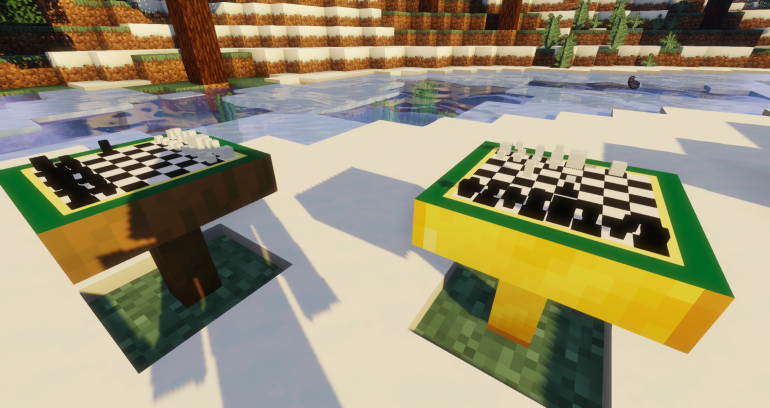
ChessMod is a Minecraft mod for both 1.14 and 1.15 branches of Forge-modded Minecraft, inspired by Pippin Barr’s Chesses, which adds playable chessboards to both single and multi-player versions of the game. There is a rules-based board that enforces chess rules and the visual of the board changes as the stated of the board changes.

An often-overlooked area of player creation is the curation, configuration, customization, and synchronization of mods into collections called modpacks. In the case of Minecraft this represents a significant aspect of the modding community allowing for less technically skilled participation and yet encompassing a high degree of know-how and creativity.
There almost 90, 000 mods listed in the curseforge repository and over 1600 pages of modpacks organized into a variety of mod and gameplay genres that emphasize different styles or play, different kinds of worlds. The top ten modpacks share more than 15million downloads between them. With extensive tweaking these packs can come to embody the narrative and gameplay visions of the modpack makers becoming discrete game experiences in their own right.
We refer to this kind of player-centric design practice as mod choreography a term which evokes the knowledge and skills of the choreography in bringing together disparate elements in the creation of a new experience. There is art and craft to mod choreography just as with modding and remains one of the most accessible pathways for players to shape play experiences for themselves and others.

Experience first contact in the future! This 2-player cooperative platformer explores what first contact between Indigenous and Settler peoples might look like thousands of years from now. The game follows the stories of Terra, an Elder Earthborn landkeeper, and Nova, a youthful Starborn inventor as they explore their respective environments and interact with the people in their communities. Their two worlds collide after a mysterious spacecraft crash-lands in Earthborn territory and Terra is sent to investigate. Nova, in the meantime, is separated from the rest of his people and must try to find them in an alien world. Inevitably, they encounter one another and must work together to uncover mysteries of the past.

This project was the first of two pieces commissioned for the Concordia Fine Arts 2019 “Field Work Rovers” initiative. The Fieldworkers worked to (1) comb the Faculty to gather data about space needs, (2) focus on specific questions and spatial problematics arising from consultations to develop case study analyses, and (3) respond to and communicate publicly “findings” from the field using a variety of fine arts methodologies.
“RoVA” is a digital game recreation of a walk through I did through Concordia’s VA building. Looking for “hidden gems,” I took photos and written reflections as I toured a space that was largely unfamiliar to me. Three categories of gem emerged; the permission for students to remix the space with their own innovations; the humanizing signs of ‘life’ and activity taking place in the building; and pride placed on celebrating students’ artistic achievements in the space.

This is a game about how immigration systems and capitalist discourses of multiculturalism combine to oppress migrants. Visa applicants (or players) are tasked with cooking a typical dish of their country of origin using a custom cooking station. Immigration authorities then evaluate applicants according to their efficiency and potential to contribute to the new country’s society. Cooking becomes a standardized test, one step within a longer application process.
Cook Your Way started in the context of the Reflective Game Design research group, and the exchanges with my peers (Rebecca Goodine, Jess Rowan Marcotte, and Dietrich Squinkifer) and research director (Rilla Khaled) were crucial to its development. The design strategies of questions over answers, clarity over stealth, disruption over comfort and reflection over immersion (more details here) were key to this process as they helped to solidify the game’s design around player reflection and critical game design approaches.

Generate Randomized Game: The Ambivalences of Online ROM-Patching Applications is a conference paper presented at the 2019 Symposium Histoire du Jeu (Game Histories Conference) in Montreal, Quebec, Canada. It is based upon interviews and game analysis that I completed during my master’s degree, in which I studied videogame hacking subcultures, and primarily discusses the community values that inform “randomizers,” a popular type of online videogame ROM-patching application.

TRACES is a physical-digital hybrid game about trans experiences and time travel. In it, the player, a trans time traveler from another galaxy, comes back to a time something like ours to recover traces from travelers who have come before them. This residue is embedded in physical objects in the space, which the player must collect using their custom field computer and scanner without drawing too much suspicion from the inhabitants of 2019.

Mx. Dressup: Squinky and Jeka’s Outfit Creator for Dapper Queer Millennials was made at Global Game Jam 2019 for the theme “What Home Means To You” and we thought about being at home in one’s own body.

Abstract
Prior scholarship on game modding has tended to focus on the relationship between commercial developers and modders, while the preponderance of existing work on the open-world sandbox game Minecraft has tended to focus on children’s play or the program’s utility as an educational platform. Based on participant observation, interviews with modders, discourse analysis, and the techniques of software studies, this research uncovers the inner life of Minecraft modding practices, and how they have become central to the way the game is articulated as a cultural artifact. While the creative activities of audiences have previously been described in terms of de Certeau’s concept of “tactics,” this paper argues that modders are also engaged in the development of new strategies. Modders thus become “settlers,” forging a new identity for the game property as they expand the possibilities for play. Emerging modder strategies link to the ways that the underlying game software structures computation, and are closely tied to notions of modularity, interoperability, and programming “best practices.” Modders also mobilize tactics and strategies in the discursive contestation and co-regulation of gameplay meanings and programming practices, which become more central to an understanding of game modding than the developer-modder relationship. This discourse, which structures the circulation of gaming capital within the community, embodies both monologic and dialogic modes, with websites, forum posts, chatroom conversations, and even software artifacts themselves taking on persuasive inflections.

“dialogical_net” is an immersive Role Playing Game experience where three players (one bot and two humans) perform the role of machines in a network that is about to be exterminated by a viral outbreak. The players, in dialogue with the conversational agent, face existential questions in the year 3030 while cooperatively uncovering the game’s lore. By immersing the audience into this imaginary universe and allowing them to embody these cybernetic characters, we intend to seed the question of what it means to be a machine; and furthermore, to speculate on what kinds of relations could human beings have with the machines.
This project challenges the traditional and current representations of human-machine relations by inviting the public to participate in a interactive experience product of a research-creation process that took place at the intersection of sociology, game design and interactive art. In addition, it facilitates the dissemination of novel perspectives on art practices as well as scientific knowledge through a creative process that respects openness and democratic values such as technological recycling, DIY and Open Source.
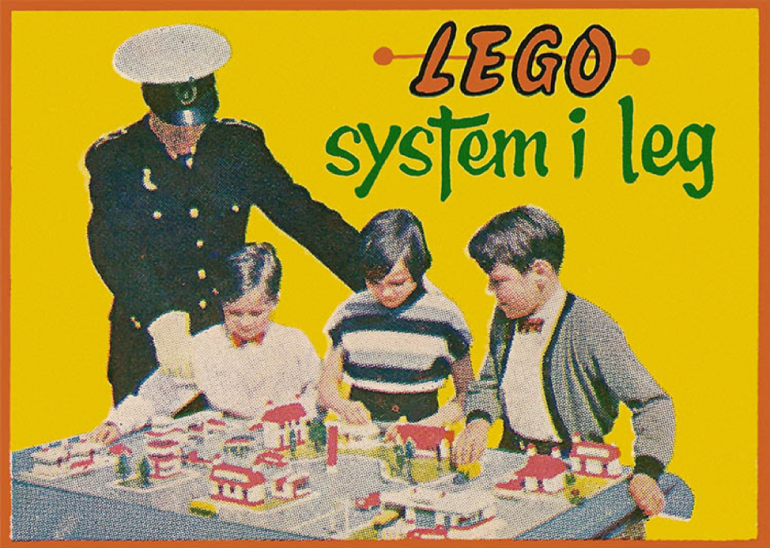
As the 20th Century drew to a close, storm clouds gathered on the horizon for the Lego Group: not only was digital culture threating to shift the focus of toy buyers and shrink Lego’s market, but the company also had to contend with the approaching expiration of its US patent in 2011. The plastic toy giant looked ahead and saw a future, very shortly approaching, where its only advantages on the toy aisle would be brand recognition and established territory—an established territory that was already shrinking as videogame cartridges crept down the aisle. So that left the brand, and there, the company saw the potential in licensed theme sets: partner with trendy pop culture properties and appeal to multiple markets simultaneously. And so, in 1999, the Lego Group partnered with LucasFilm Ltd. in anticipation of The Phantom Menace to release Lego: Star Wars.
Since then, the Lego Group has developed more than 60 licensed themes from two dozen other companies ranging from Columbia Pictures and Viacom to Warner Bros. and Lamborghini. Meanwhile, they’ve expanded into every other conceivable media form: amusement parks, merchandise, apparel, breakfast cereal, film…and video games. Now, they not only retain their dominance in the toy aisle over all other pretenders: they’re on our TV screens and bed linens and backpacks, too. This was a paradigm shift for the Lego Group, where the company’s top management began considering the LEGO brand, rather than its actual products, as its top asset.

circuits is a narrative-based Twine game that explores what it means to try and talk about sexual trauma. The story grapples with everything that can and cannot be said, whether these stories are told online, to the media, to health care professionals, or even in legal courts. The narrative above explores what it means to remember, witness, and talk about sexual trauma.